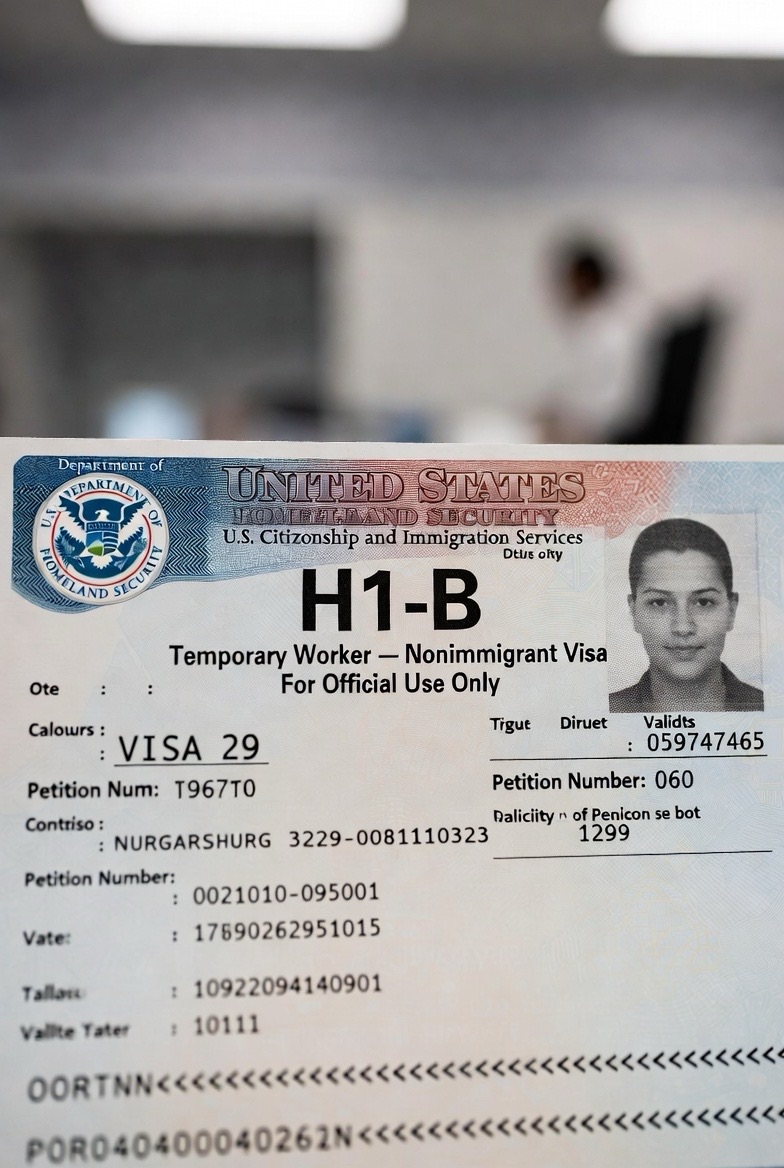
Common examples of H-1B jobs include roles in technology (software engineers, data scientists), engineering, medicine, accounting, architecture, science/research positions, and certain university teaching roles. It’s one of the main ways skilled foreign professionals (especially from countries like India and China) come to work in the U.S. temporarily.
Key Features and Eligibility
• Employer-Driven: The process is sponsored by a U.S. employer (company, university, nonprofit, etc.). The worker cannot self-petition.
• Specialty Occupation Requirement: The job must need theoretical and practical application of specialized knowledge. The beneficiary (worker) must have:
• A U.S. bachelor’s or higher degree in a directly related field, or
• A foreign equivalent degree, or
• An unrestricted state license/registration/certification to practice in the field, or
• Equivalent education, training, or progressively responsible experience recognized as expertise.
• Labor Condition Application (LCA): The employer must first get an LCA certified by the U.S. Department of Labor (DOL), promising to pay the worker at least the higher of the prevailing wage for the job/location or what similar U.S. workers earn, provide good working conditions, and notify workers/unions.
Annual Cap and Lottery Process
There’s a strict annual limit (cap) on new H-1B visas:
• 65,000 regular cap visas per fiscal year (October 1 – September 30).
• An extra 20,000 for beneficiaries with a U.S. master’s degree or higher (advanced degree exemption). Many exemptions exist (e.g., jobs at universities, nonprofit research organizations, government research orgs — these are “cap-exempt” and don’t count toward the limit).
Demand far exceeds supply (often hundreds of thousands of registrations), so most cap-subject cases go through a registration and lottery system:
• Employers submit electronic registrations (usually in March) with basic info about the beneficiary and job.
• USCIS selects registrations (historically random lottery).
• Selected registrations allow the employer to file a full petition (Form I-129).
• Recent change (final rule from December 2025, effective February 27, 2026, applying to FY 2027 and later): USCIS shifted to a weighted selection process that generally favors higher-wage and higher-skilled positions (based on wage levels from DOL data), while still allowing selections across wage levels. This aims to prioritize more critical/high-value roles.
For fiscal year 2026, the cap was already reached.
Duration and Extensions
• Initial approval: Up to 3 years.
• Extendable once for another 3 years (total maximum 6 years under normal rules).
• Extensions beyond 6 years possible in certain cases (e.g., if a green card process is underway and delayed due to backlogs/per-country limits — often in 1- or 3-year increments).
• If the worker owns a controlling interest (>50%) in the petitioning company, initial and first extensions are limited to 18 months each.
Family and Path to Permanent Residency
• Spouses and unmarried children under 21 can get H-4 dependent status.
• Certain H-4 spouses may apply for work authorization (EAD) if the principal H-1B holder has an approved immigrant petition (I-140).
• Many H-1B holders use it as a stepping stone to a green card (permanent residency) through employer-sponsored categories like EB-2 or EB-3, though long backlogs exist for some countries.
Other Notes
• The worker must intend to return home after the temporary period (nonimmigrant intent), though dual intent is allowed — meaning they can pursue a green card without jeopardizing H-1B status.
• Employers pay most fees; workers can’t pay petition fees in many cases.
• Recent policies include a Presidential Proclamation (effective September 2025) requiring a $100,000 payment for certain new H-1B petitions for beneficiaries outside the U.S. without valid H-1B visas (with limited exceptions for national interest).
For the most up-to-date and official details, check the USCIS website (uscis.gov) under “H-1B Specialty Occupations,” as rules can change through regulations, proclamations, or legislation. If you’re considering applying, consulting an immigration attorney is strongly recommended due to the complexity and annual changes.
Leave a Reply