Spirit Unites. Human Control Divides.
Across history, one pattern appears again and again: what begins as a living encounter with the Divine often becomes, in human hands, a structure of control. A revelation becomes a system. A spiritual teacher becomes an institution. A path of awakening becomes a boundary marker between “us” and “them.”
At its highest expression, religion points humanity toward truth, humility, compassion, and inner transformation. It can remind us that life is sacred, that love is higher than fear, and that the soul is not separate from the Source that gave it being. But once religion becomes dominated by human ambition, fear, and ego, it often ceases to be a doorway into the sacred and becomes something else entirely: a tool for identity, power, and division.
This is one of the deepest spiritual tragedies in human history. The very systems meant to guide people toward God have often been used to keep them from direct experience of the Divine.
Historical Examples:
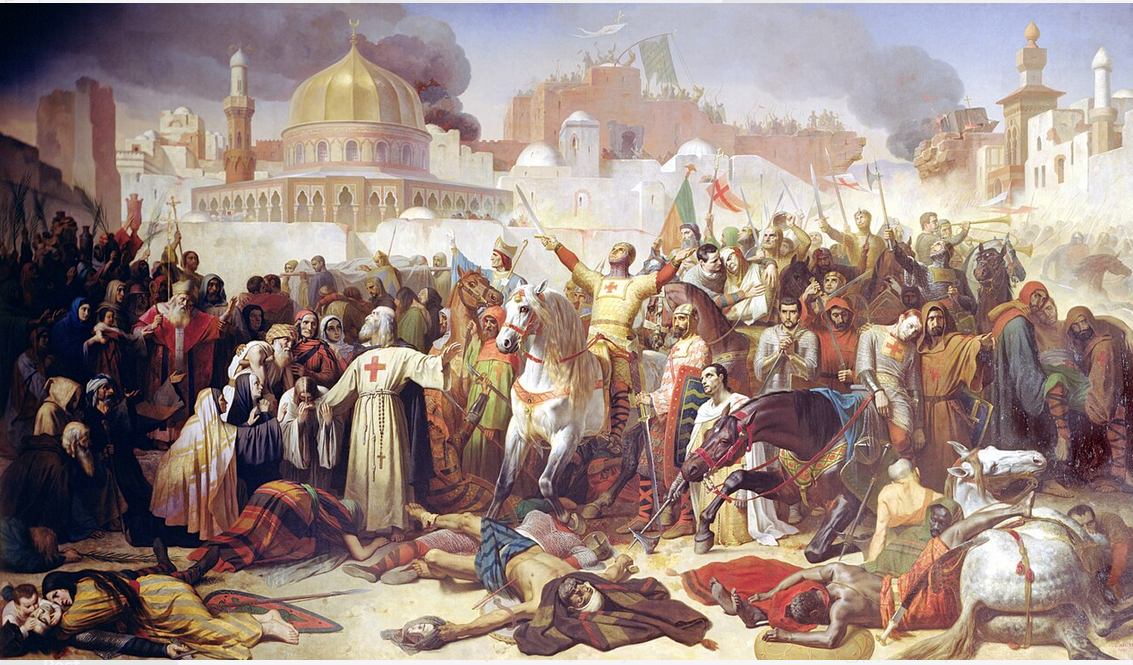
- The Crusades (11th–13th centuries): Popes and kings framed wars against Muslims (and sometimes other Christians) as holy duty, turning religious devotion into military conquest and massacres.
- The European Wars of Religion (16th–17th centuries): Catholics and Protestants slaughtered each other over doctrinal differences, with leaders on both sides claiming divine mandate. Inquisitions and witch hunts: Religious authorities used fear of heresy or demonic influence to justify torture, executions, and social control.
- Modern examples include sectarian conflicts (e.g., Sunni-Shia tensions in parts of the Middle East) , religiously motivated terrorism, or political movements that blend faith with nationalism to demonize opponents like the one we see today in Iran and surrounding area.
The Difference Between Revelation and Institution
There is a profound difference between a genuine spiritual impulse and the institutions that later grow around it.
A true spiritual impulse is alive. It awakens the heart. It softens the ego. It invites humility, reverence, self-examination, and love. It does not need an enemy to survive. It does not require domination. It does not become stronger by suppressing questions.
An institution, however, is built by human beings. It develops leadership, rules, identity, property, hierarchy, and the instinct for preservation. None of those things are automatically evil, but they create a danger: preserving the institution can become more important than preserving the truth.
Once that shift happens, religion may no longer ask, “How do we know God?” but instead ask, “How do we defend our group?” The focus quietly moves from transformation to conformity, from awakening to obedience, from inward realization to external control.
How Religion Becomes a Weapon
When religion is controlled by humans rather than guided by spirit, several patterns usually emerge.
First, religion becomes tribal. People begin to see themselves as the chosen, the pure, the saved, the enlightened, or the rightful heirs of truth, while others are viewed as deceived, impure, dangerous, or rejected. The sacred is reduced to identity politics.
Second, religion becomes political. It starts to serve rulers, governments, classes, or ideologies. Divine language is used to justify earthly power. The language of heaven is enlisted to defend territory, wealth, hierarchy, and domination.
Third, religion becomes fear-based. Instead of awakening love, it enforces obedience through guilt, shame, exclusion, and threats. People are taught to fear questioning more than falsehood, and to fear difference more than lovelessness.
Fourth, religion becomes externalized. The kingdom within is replaced by endless concern over appearances, rituals, labels, and doctrinal policing. What matters most is no longer the state of the heart, but visible conformity to group expectations.
This is how religion, which should heal division, begins to deepen it.
The Mystical Core Tells a Different Story
Yet within nearly every tradition there have always been voices pointing beyond the institution.
The mystics, sages, and awakened souls of the world rarely speak the language of domination. They speak of union, inner rebirth, purification of the heart, surrender of the false self, and direct encounter with the Divine Presence. Their message is often unsettling to the religious authorities of their time because it shifts power away from the gatekeepers and back to the soul.
The mystic says the temple is within.
The mystic says the veil is in consciousness.
The mystic says love is greater than law when law is severed from spirit.
The mystic says that God cannot be contained by one institution, one priesthood, one label, one book, or one people’s claim of superiority.
This is why the mystics are so often marginalized, silenced, or misunderstood. They threaten systems that depend on mediation, exclusivity, and control.
Why Human Beings Keep Repeating the Pattern
Why does this happen so consistently?
Because the ego wants certainty, status, and belonging more than truth. It prefers to join the righteous crowd rather than die to itself. Institutions know how to offer identity, and identity feels safer than spiritual transformation.
Real spirituality is demanding. It calls for inner honesty. It asks us to confront pride, fear, resentment, self-deception, and the need to be superior. It strips away masks. It does not flatter the personality. It transfigures it.
Institutional religion, by contrast, can allow a person to feel spiritually secure without actually being transformed. One can belong, repeat, defend, argue, condemn, and perform outward devotion while the heart remains untouched.
That is why religious conflict is often so intense. People are not merely defending ideas. They are defending identity structures that support the ego’s sense of self.
From Divine Encounter to Collective Division
Once religion becomes fused with group identity, conflict becomes almost inevitable. History is filled with examples of traditions that began with visions of justice, mercy, unity, and transcendence, only to later become entangled in conquest, persecution, exclusion, or sectarian rivalry.
When the human mind takes hold of the sacred and says, “God belongs to us more than to them,” violence is already close at hand.
At that point, religion is no longer serving the Divine. It is serving the collective ego.
This does not only happen in formal religion. The same pattern appears in political ideologies, national myths, social movements, and even anti-religious systems. Anything humans absolutize can become religion-like. Anything tied to identity can become a weapon. The form changes; the psychological pattern remains.
The Inner Path Is the Antidote
What, then, is the answer?
Not necessarily abandoning religion altogether, but recovering its inner meaning.
The antidote to corrupted religion is not cynicism. It is deeper discernment. It is learning to distinguish between spirit and structure, between revelation and control, between the voice of God and the voice of collective fear dressed in sacred language.
The inner path asks different questions:
- Does this teaching expand love or intensify hatred?
- Does it deepen humility or inflate superiority?
- Does it lead toward compassion, truthfulness, and inner transformation?
- Does it free the soul to know God more directly, or bind the soul more tightly to human authority?
A path that truly comes from the Divine will bear certain fruit: love, clarity, humility, courage, mercy, and reverence for the sacredness of all life. A path rooted mainly in human control will bear different fruit: fear, domination, superiority, exclusion, and endless conflict.
The fruits reveal the tree.
The Forgotten Unity Beneath the Forms
Beneath the outer forms of religion lies a deeper unity that many of the world’s great spiritual traditions point toward in different language. The names differ. The symbols differ. The rituals differ. But the deeper current speaks of return, remembrance, awakening, purification, and reunion with the Source.
When this deeper current is felt, the need to dominate others weakens. One no longer needs enemies in order to feel chosen. One no longer needs to diminish another path in order to honor one’s own. Truth need not be defended through hatred.
This does not mean all teachings are identical or equally sound. Discernment still matters. But spiritual maturity recognizes that the Infinite cannot be reduced to a tribal possession.
The Divine is not glorified by contempt.
A Necessary Spiritual Maturity
Humanity may now be reaching a point where it must outgrow childish religion without losing the sacred. We must learn how to honor the wisdom within traditions without surrendering conscience to institutions. We must become mature enough to seek God beyond fear, beyond tribal identity, and beyond the need for domination.
That maturity does not destroy religion at its best. It purifies it.
It restores religion to its original purpose: not to separate humanity into hostile camps, but to awaken the soul to its Source.
Final Reflection
Whenever religion teaches us to hate, despise, dehumanize, or exalt ourselves above others, something essential has already been lost. The outer form may remain, but the living spirit has begun to depart.
True spirituality does not need enemies to prove its truth.
It does not spit, bomb, mock, dominate, or crush in the name of God.
It calls, instead, for remembrance.
Remembrance that the soul is more than a label.
Remembrance that love is higher than fear.
Remembrance that no institution fully contains the Infinite.
And remembrance that what is born of Spirit will always move toward unity, while what is ruled by ego will always move toward division.
In the end, the deepest line may be the simplest:
Spirit unites. Human control divides.
Leave a Reply