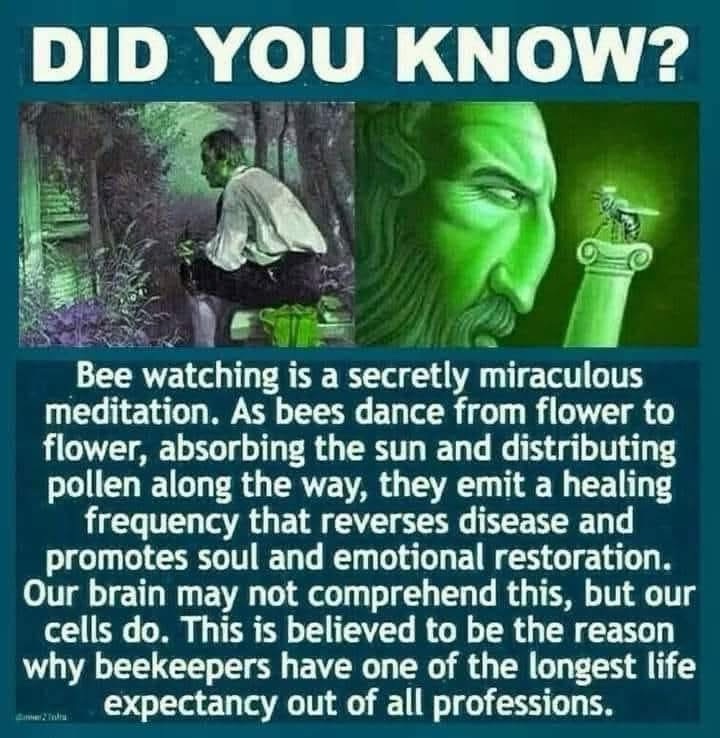
Multiple studies and large population analyses suggest that beekeepers tend to live longer than the general population—often by several years on average.
Researchers point to a combination of lifestyle and biological factors:
1. Regular exposure to bee products
• Propolis, royal jelly, honey, and especially bee venom contain anti-inflammatory, antioxidant, and immunomodulatory compounds.
• Bee-venom therapy (apitherapy) has documented anti-arthritic and possible anti-cancer effects in small human trials.
2. Frequent low-dose venom exposure (from stings)
• Melittin and other peptides in bee venom trigger mild systemic inflammation that may train the immune system and reduce chronic inflammation over time (similar to hormesis).
• Some oncologists have noted unusually low cancer rates of certain cancers among long-term beekeepers.
3. Outdoor, physical lifestyle
• Beekeeping involves moderate physical activity, time in nature, and sunlight exposure (vitamin D).
4. Lower smoking rates
• Beekeepers generally smoke much less (or not at all) because cigarette smoke irritates bees and ruins honey flavor.
5. Psychological benefits
• Lower reported stress, mindfulness from working with colonies, and strong social networks within beekeeping communities.
Caveats
• Most evidence is observational, not randomized controlled trials, so causation isn’t proven.
• Selection bias exists: people who choose beekeeping may already be healthier or more health-conscious.
• The longevity advantage appears strongest in lifelong or long-term beekeepers (20+ years).
Bottom Line
While not guaranteed, the data consistently show beekeepers as a group enjoy above-average longevity and lower rates of several major diseases. The combination of bee-product consumption, regular micro-doses of venom, outdoor activity, and healthy habits appears to give them a measurable edge.
So yes—statistically, beekeepers really do seem to live longer.
Leave a Reply