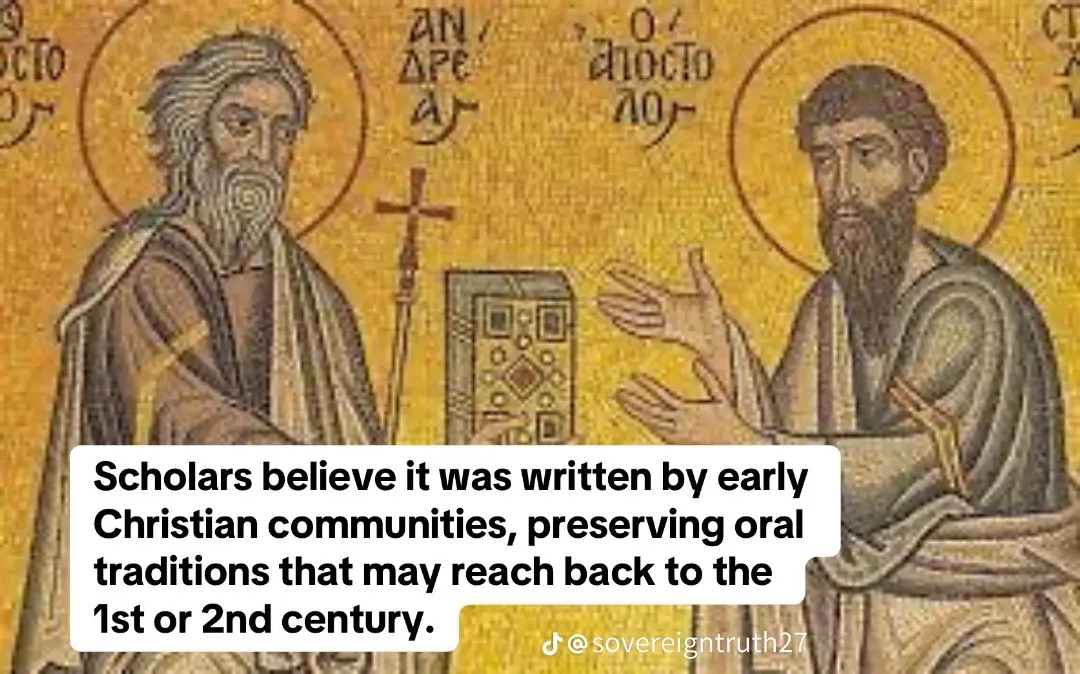
The Nag Hammadi Library contains texts once thought to have been entirely destroyed during the early Christian struggle to define “orthodoxy” – scriptures such as the Gospel of Thomas, the Gospel of Philip, and the Gospel of Truth. The discovery and translation of the Nag Hammadi library, initially completed in the 1970’s, has provided impetus to a major re-evaluation of early Christian history and the nature of Gnosticism.
The first three sayings if the Gospel of Thomas are as follows:
These are the secret sayings which the living Jesus spoke and which Didymos Judas Thomas wrote down.
(1) And he said, “Whoever finds the interpretation of these sayings will not experience death.”
The seeker must discover within themselves the key that unlocks meaning, for each saying operates on multiple levels—literal, ethical, mystical, and cosmic. Interpretation thus becomes initiation: the movement from external reading to inner realization. Each saying is a doorway; only the heart that enters finds immortality. The “deathless” are those who live from awareness of their divine origin, and their lives become ongoing interpretation—living scripture written by the soul in light.
(2) Jesus said, “Let him who seeks continue seeking until he finds. When he finds, he will become troubled. When he becomes troubled, he will be astonished, and he will rule over the All.”
The Gospel of Thomas presents spiritual knowledge (gnosis) not as belief, but as the experiential discovery of divine identity. The progression from “seeking” to “finding,” from “trouble” to “awe,” reflects the initiatory path of transformation described in many mystical traditions. The seeker’s perseverance, tempered by faith, forgiveness, and humility, leads to the flowering of wisdom, love, and peace—the fruits of gnosis. To “reign over the All” is to dwell in equilibrium, where knowing and being are one.
(3) Jesus said, “If those who lead you say to you, ‘See, the kingdom is in the sky,’ then the birds of the sky will precede you. If they say to you, ‘It is in the sea,’ then the fish will precede you. Rather, the kingdom is inside of you, and it is outside of you. When you come to know yourselves, then you will become known, and you will realize that it is you who are the sons of the living father. But if you will not know yourselves, you dwell in poverty and it is you who are that poverty.”
This revelation parallels the words of The Gospel of Mary, where the risen Christ tells Mary, “The kingdom is in you; seek it within and without.” The Gospel of Philip explains, “The world is illusion; those who know themselves discover the truth of the Father.” In each, the awakening of divine identity is the true resurrection. the “child of the living Father” is the awakened Self, free from identification with the transient personality. To “know yourself” is to perceive that your awareness is not merely personal but cosmic—a spark of the same light that ignited the stars.
Leave a Reply