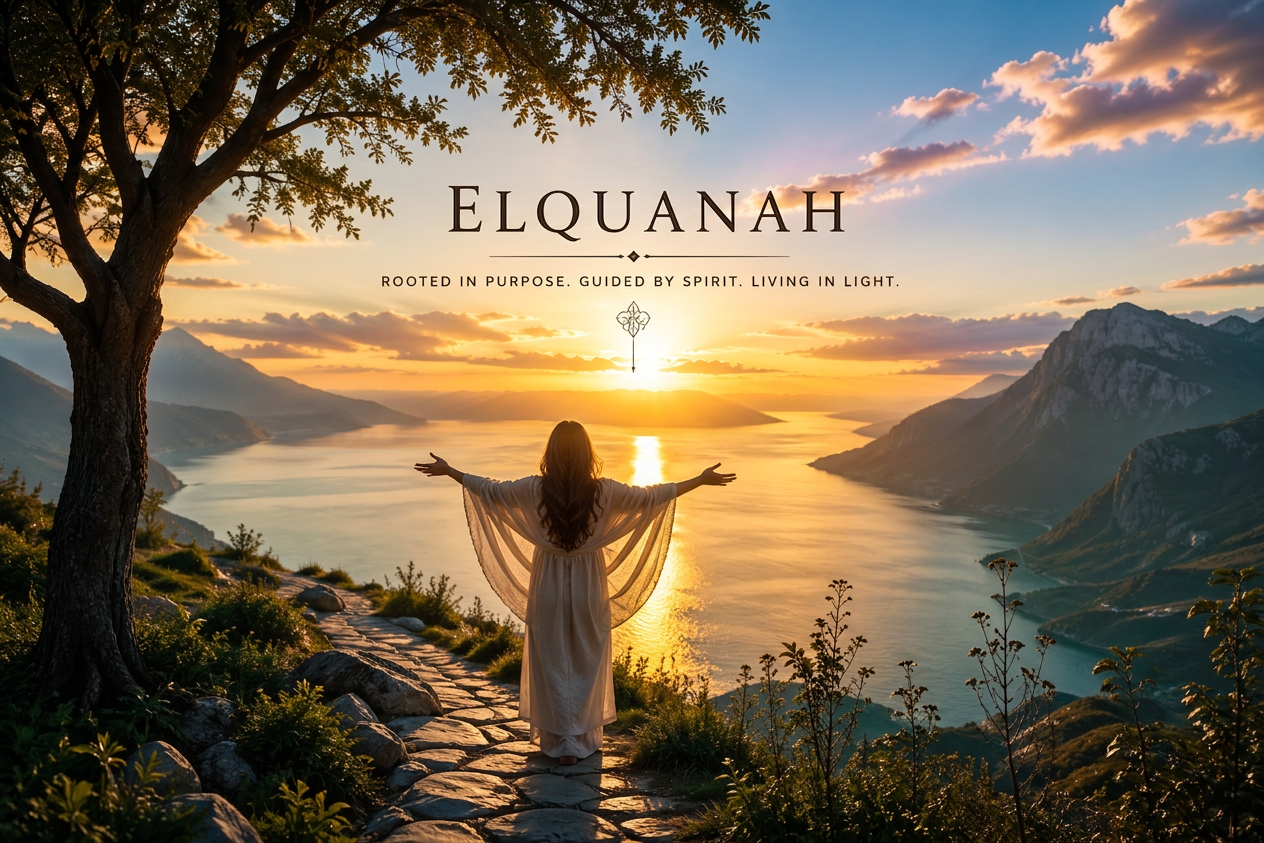
In Gospel of Matthew 7:14, when Jesus speaks of the “narrow gate” and the difficult path that leads to life, he is pointing to an inward journey of awareness, truth, and alignment rather than an external rule or religion. The “narrow path” represents a conscious way of living—choosing love over fear, truth over illusion, and presence over distraction—while the “wide path” reflects drifting through life unconsciously, following the crowd and the ego. It is “narrow” not because it is exclusive, but because it requires clarity, self-honesty, and inner discipline, which few are willing to embrace. Ultimately, the “life” Jesus refers to is not just physical existence, but a deeper spiritual awakening—the realization of the divine presence within.
In Gospel of Matthew 6:22, Jesus teaches that “the eye is the lamp of the body,” pointing to the idea that our inner perception shapes our entire experience of life. When the “eye” is single—meaning clear, focused, and aligned with truth—the whole being is filled with light, reflecting clarity, peace, and spiritual awareness. But when perception is clouded by fear, division, or ego, it fills life with confusion and darkness. In essence, Jesus is emphasizing that what we focus on and how we see determines the state of our inner world, and ultimately, the quality of our life
In Gospel of Matthew 6:33, Jesus teaches, “Seek first the kingdom of God and His righteousness, and all these things will be added to you,” pointing to a reordering of priorities from external striving to inner alignment. The “kingdom” is not a distant place but the living presence of God within, and “righteousness” refers to being in harmony with that truth. When a person centers their life on this inner connection—living with trust, integrity, and awareness—outer needs naturally fall into place. Rather than chasing provision through worry or effort alone, Jesus invites a shift into alignment with the divine, where life flows with greater ease and sufficiency.
In Gospel of Luke 11:52, Jesus rebukes the religious experts for taking away the “key of knowledge,” meaning they obscured direct understanding of truth through rigid interpretations and control. Instead of helping others enter into genuine insight and connection with God, they created barriers—neither entering themselves nor allowing others to enter. At a deeper level, Jesus is pointing to the danger of external authority replacing inner realization: true knowledge is not meant to be hidden or controlled, but awakened within.
In Gospel of Luke 17:21–22, Jesus teaches that the Kingdom of God is not something observable in a physical or external way, but a living reality “within you” (or “among you”), pointing to an inner spiritual presence rather than a visible event or location. He then tells his disciples that a time will come when they will long to see even one of “the days of the Son of Man” but will not see it, suggesting that people often look outward for what must be realized inwardly. Together, these verses emphasize that the divine kingdom is already present within, yet easily overlooked when one seeks it only through external signs or future expectations.
Together, these teachings point to one central message: the Kingdom is not found through outward religion, fear, or external signs, but through inner awakening and alignment with the divine presence within. In John 14:14, Jesus’ invitation to ask “in my name” means to ask from his nature—love, unity, truth, and divine alignment—not merely by using a phrase. His “I AM” sayings reveal pure being, the divine identity beneath personality and separation. Matthew 7:14 describes this as the “narrow path,” the inward way of truth and self-honesty that few choose. Matthew 6:22 teaches that when the “eye” is single—clear, unified, and undivided—the whole being is filled with light. Matthew 6:33 tells us to seek first the Kingdom, meaning to place inner communion with God above worldly striving. Luke 11:52 warns against religious authorities who take away the “key of knowledge” by blocking direct spiritual realization. Luke 17:21–22 completes the teaching by declaring that the Kingdom is within or among us, not something to be chased outwardly. This closely mirrors the Gospel of Thomas, especially Saying 22, where Jesus says that when we “make the two one”—inner and outer, upper and lower, male and female—we enter the Kingdom. In essence, all these verses teach that salvation, illumination, and the Kingdom arise when division dissolves and the soul awakens to the divine “I AM” within.
Jesus in the Gospel of Thomas Saying 3 tells us:
“If those who lead you say to you, ‘See, the kingdom is in the sky,’ then the birds will precede you. If they say to you, ‘It is in the sea,’ then the fish will precede you. Rather, the kingdom is inside of you and it is outside of you. When you come to know yourselves, then you will be known, and you will realize that you are the children of the living Father. But if you do not know yourselves, you dwell in poverty, and you are that poverty.”
Leave a Reply