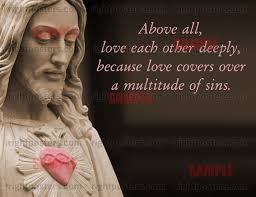
Jesus or Paul?

Jesus emphasizes:

Kingdom of God / Kingdom of Heaven is within

Spiritual transformation

Ethical action and inner purity

Repentance

Love of God and Love of neighbor as yourself

Nonviolence / forgiveness / humility

His path was behavioral + relational + transformational.

Paul emphasizes:

Christ crucified and risen

Justification by faith

Salvation apart from works of the Law

Universal inclusion of Gentiles Church as the Body of Christ

Paul created a new religion centered on Christ instead of the Kingdom.

Famous scholars like Albert Schweitzer, S.G.F. Brandon, Hyam Maccoby, Bart Ehrman, and others analyze this debate.

Even early Jewish-Christian groups (Ebionites, Nazarenes) rejected Paul as innovator — suggesting this tension is ancient.

Now that the veil is being lifted, and we are in the position with the information and knowledge to make our own decisions.


Comments

One response to “Jesus or Paul?”

  1. HAROLD BIRKENHEAD Avatar
    HAROLD BIRKENHEAD

    You’re naming a real and longstanding tension within Christianity, and one that serious scholars have wrestled with for generations, not as a conspiracy to uncover, but as a historical and spiritual complexity to be understood.
    Jesus’ teaching clearly centers on the Kingdom of God, inner transformation, ethical practice, and a lived way of love, forgiveness, and humility. Paul, writing later and to very different audiences, interprets Jesus primarily through the lens of his death and resurrection, emphasizing participation in Christ and the formation of a unified community that could extend beyond Jewish law. Those emphases are not identical, and the tension between them is ancient, as even early Jewish-Christian groups recognized.
    I would add a nuance about the claim that Paul “created a new religion.” Paul did not see himself as inventing something new; he believed he was interpreting what God had done through Jesus. Yet it is also true that Paul’s theological framing proved especially portable and adaptable, and over time it came to shape Christianity more decisively than the remembered teachings and practices of Jesus himself. That outcome matters, even if the intention was sincere.
    For me, the question is not Paul or Jesus, but which has been given primary authority in shaping Christian faith: Jesus’ way of life, or later interpretations of Jesus’ significance. Recovering Jesus’ voice does not require rejecting Paul, but it does invite us to re-center the path Jesus actually taught and lived.
    My own hope is less about “the veil being lifted” and more about learning to listen more carefully, to Jesus, to the earliest witnesses, and to the tradition itself, with humility rather than certainty.

Leave a Reply

Discover more from Inspiration

Subscribe now to keep reading and get access to the full archive.

Continue reading